Disclaimer

All music on this site for sampling purposes only. Everything downloaded from here should be used for that purpose alone and not to be reproduced commercially. If you liked the albums you downloaded from here, please buy the original album from the seller or authorized dealer.

Showing posts with label Sitar. Show all posts

Monday, December 13, 2010

The Silk Road Ensemble - Live in Concert


Ustad Shujaat Khan stands at the head of a long line of master musicians and is today's leading proponent of the Imdadkhani gharana (tradition) of sitar playing. Seventh in a continuous thread of distinguished instrumentalists, Ustad Shujaat Khan's legacy includes many of the most venerable figures in Indian classical music: great-great grandfather Ustad Sahabdad Khan, great-grandfather Imdad Khan, grandfather Inayat Khan, and father Vilayat Khan. From Ustad Sahabdad Khan's important addition of the tarab (sympathetic strings) to the sitar, to Vilayat Khan's development of the gayaki ang (vocal playing style) and brilliant melding of technical, melodic, compositional, improvisational, and rhythmic artistry, Ustad Shujaat Khan's family legacy is undeniably impressive.

1. Darbari 22:20
2. Bhairavi 14:33
3. Kamaaz 23:03

Shujaat Hussain Khan - Sitar & Vocals
Kayhan Kalhor - Kamancheh
Sandeep Das - Tabla

Download:-
Part 1   |   Part 2

Friday, December 10, 2010

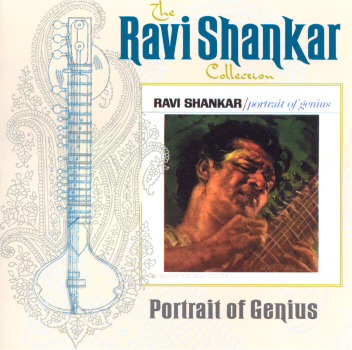
Ravi Shankar - Portrait of Genius (1998)


A disciple of Allauddin Khan (founder of the maihar gharana of indian classical music), Pandit Ravi Shankar is arguably the best-known Indian instrumentalist, and is well known for his pioneering work in bringing the power and appeal of the indian classical music tradition, as well as indian music and its performers in general, to the West. This was done through his association with The Beatles as well as with his own personal charisma. His musical career spans over six decades and Shankar currently holds the Guinness Record for the longest international career.
Tracklist: 1. Tala Rasa Ranga
2. Dhun
3. Tabla - (with Dhwani)
4. Song From the Hills
5. Tala-Tabla Tarang
6. Gat Kirwani
7. Raga Multani
Click Here to Download

Ustad Rais Khan - Ragas Marwa & Bhairavi


The sitar style of Rais Khan is distinctive for its delicacy and his fine control, as well as for the tremendous speed of his tans. He relies on inspiration more than organisation; this can make his performances unpredictable, but at their best truly outstanding. This CD was recorded live at the intimate Kufa Gallery. and it's clear from the music that Rais had many inspired moments.

Track Listing
-------------
1. Raga Marwa
vilambit gat in teental,
drut gat in teental

2. Raga Bhairavi
dadra tal

Rais Khan - Sitar
Anindo Chatterjee - tabla
Uma Mehta - Tanpura


Wednesday, November 17, 2010

Anoushka Shankar - Rise

Anoushka Shankar may boast celebrity relatives (she's Ravi Shankar's daughter and Norah Jones's half sister), but her sitar mastery is all her own. On previous recordings, she followed in her father's footsteps by performing relatively traditional, raga-based music. RISE, however, is another animal entirely, incorporating jazz, pop, and pan-ethnic world-music textures in an unpredictable melange. At the center of it all, fortunately, are Shankar's unerring sitar expertise and traditional Indian roots.


Tracklist:01.Prayer in Passing
02.Red Sun
03.Mahadeva
04.Naked
05.Solea
06.Beloved
07.Sinister Grains
08.Voice of the Moon
09.Ancient Love

Bonus Tracks:
10.Beloved(Remix)
11.Naked (Remix)
Personnel:
Anoushka Shankar (sitar, keyboards)
Sanjeev Chimmaigi, Ritesh Mishra, Rajesh Mishra (vocals)
Vishwa Mohan Bhatt (veena)
Barry Phillips (cello)
Pedro Eustache (bansuri, duduk)
Ajay Prasanna (bansuri)
Pedro Ricardo Mino (piano)
Pulak Sarcar (keyboards)
Kevin Cooper (bass instrument)
Jesse Charnow (drums)
Tanmoy Bose (djembe, tabla)
Tapan Raj (programming)
Bikram Ghosh (sound effects)


Click Here to Download


Saturday, November 13, 2010

Ravi Shankar - Ravi Shankar

Ravi Shankar is the 20th century's most famous player of the complex stringed instrument known as the sitar. The 1950s were possibly Shankar's most creative period: he composed and performed, worked as musical director of All-India Radio in Delhi, created the Vadya Vrinda Chamber Orchestra, scored films (most notably the Apu Trilogy of director Satyajit Ray) and began touring the world and winning acclaim for himself and for Indian music. In the 1960s Shankar grew still more famous for his influence on The Beatles, who used a sitar in some of their more psychedelic tunes. (Shankar was particular friends with George Harrison, who produced some of Shankar's later albums.) As years passed Shankar became known less as a performer and more as an elder statesman of world music. In 2000 he was given the French Legion of Honor, and in 2001 he was awarded an honorary knighthood by Queen Elizabeth II.


Track Listing
-------------
CD1 EAST GREETS EAST - RAVI SHANKAR IN JAPAN 1978/1979

[01]. [east Greets East - Ravi Shankar In Japan] Padhasapa
[02]. Kaharwa
[03]. Improvisation On The Theme Of Rokudan
[04]. Namah Shivaya
[05]. Tribute To Nippon
[06]. [ragas Hameer & Gara] Raga Hameer

CD2 RAGAS HAMEER & GARA (Fortsetzung) 1979/1980[01]. [ragas Hameer & Gara (fortsetzung)]
[02]. Tala Farodast
[03]. Raga Gara
[04]. [raga Jogeshwari] Alap
[05]. Jor
[06]. Gat I


CD3 RAGA JOGESHWARI (Fortsetzung) 1980/1981[01]. [raga Jogeshwari (fortseztzung)] Gat Ii
[02]. [homage To Mahatma Gandhi, Raga Hemant]
[03]. [homage To Baba Allauddin, Raga Hemant]

Click Here to Download Part - 1

Click Here to Download Part - 2

Click Here to Download Part - 3

Click Here to Download Part - 4

Tuesday, November 2, 2010

Nikhil Banerjee - Sitar (1992)


When Nikhil Banerjee died in 1986, India didn't just lose one of its greatest sitar players, but one of its most influential classical musicians. A former child prodigy who won the All-Bengal sitar competition at the age of nine, Banerjee grew up to earn international acclaim as a highly skilled musician. According to The San Francisco Chronicle, Banerjee's "technique is a phenomenon, faster than cheetahs, more secure than the dollar." Music And Musicians observed that "his improvisations always sound completely natural and spontaneous.." In an obituary published after his death, The New York Times wrote "the extraordinary fluidity and assurance of his rhythmic ideas and phrasing set a standard that would have left the more international 'stars' of Indian music behind."

The son of an amateur musician, Banerjee was fascinated by his father's playing. Although he wanted to try his hand at an instrument as early as the age of four, he was discouraged by his father and grandfather. At the age of five, however, they relented and he acquired a small sitar. Banerjee took to the instrument immediately. In addition to winning the All-India sitar competition, he became the youngest musician employed by All-India Radio at the age of nine. He remained a featured radio performer for five years. One of 15 children, Banerjee was greatly influenced by Ustad Amir Khan, who would come to his family home to teach his older sister. Banerjee also studied with Mustaq Ali Khan for three months and Jnan Prakash Ghosh, who taught him to play tabla. His greatest teacher, however, was Baba (Allaudin Khan), with whom he apprenticed, along with Ravi Shankar, from 1947 until 1952. Following Khan's death, Banerjee went on to study with Khan's son, Ali Akbar Khan, for an additional five years. Banerjee subsequently performed an estimated 1,000 concerts in India as Khan's accompanist. Banerjee performed his first concerts outside of India in 1955 as a member of a cultural delegation sent by the Indian government to Poland, Russia, and China. He made his United States debut in 1967. For many years, Banerjee spent three months each summer teaching, performing, and lecturing/demonstrating at U. C. Berkeley.

In 1968, Banerjee was awarded the honorary title Padma Shri. The same year, he was named India's "outstanding musician of the year" by the Sangeet Nagat (music and dance) Academy.

Track Listing
-------------
1. Raag Des - Gat In Vilambit & Drut Teentaal
2. Raag Mishra Gara
3. Raag Rachna Thumri Ang
4. Raag Rachna Khamaj Thumri

Click Here to Download Part - 1

Click Here to Download Part - 2

Monday, November 1, 2010

Ravi Shankar - Tana Mana


On his first release for Private Music, Ravi Shankar combined the traditional instruments of Indian music (sitar, sarod, tabla, etc.) with synthesizers and heavy sampling keyboard usage. Surprisingly enough, the combination works out for the best on the majority of the tracks. The reverberant quality of the sitar combines rather well with the chosen electronic accompaniments to form a set of coherent songs, unlike many other such attempted combinations of traditional instruments and technology. The sitar playing is, as usual, superb -- who would expect anything else to come from the legend himself (and/or his associate Shubho Shankar). With an extra sarod thrown in, a small front line of synthesizers, and Shankar's friend George Harrison assisting on the autoharp, the pile of musicality that forms allows an unexpectedly coherent, clear, and relatively focused piece of music to emerge. There are no specific highlights to speak of on this album, as all of the tracks are equal, and the level at which they are equal is rather high. The only real gripe to be had with the album is the lack of straight Indian classical playing by Shankar, though with his multitude of other albums, that can be forgiven.

Track Listing
-------------
[01]. Chase
[02]. Tana Mana
[03]. Village Dance
[04]. Seven and 10½
[05]. Friar Park
[06]. Romantic Voyage
[07]. Memory of Uday
[08]. West Eats Meat
[09]. Reunion
[10]. Supplication

Click Here to Download

Click Here to Download

Friday, October 22, 2010

Krishna Bhatt with Zakir Hussain

Kirwani: Essence of a Raag (Sitar & Tabala)

Released on 1997

1 Raag Kirwani - Bhatt, Hussain
2 Raag Ahir Bhairava - Bhatt, Hussain


Click Here to Download

Tuesday, October 19, 2010

Amanath Mishra – Bramhanad Vol 1 & 2

Artists: Amarnath Mishra; Sitar
Santosh Kumar Mishra; Sarangi
Shyam Kumar Mishra; Tabla

Bhairavi Alap excerpt Pt. Amarnath Mishra


Bramhanad I –Morning to Noon

01 - Parameswari
02 - Charo Kesi
03 - Todi
04 - Shuddha Sarang

Bramhanad II - Noon to Evening

01 - Madhuvanti
02 - Bageshri
03 - Saraswati
04 - Kirvani


Click Here to Download

Monday, October 18, 2010

Debu Chaudhuri - The Lyricism in Sitar Vol 1 & 2

Debu Chaudhuri - The Lyricism in Sitar Vol 1 & 2
Tracks:-

01 - Yaman - Alap, Masitkhani, Madhyalaya, Razakhani 65 MB

02 - Bageshree - Alap, Razakhani, Drut, Razakhani.66 MB

Click Here to Download Vol.1

Click Here to Download Vol.2